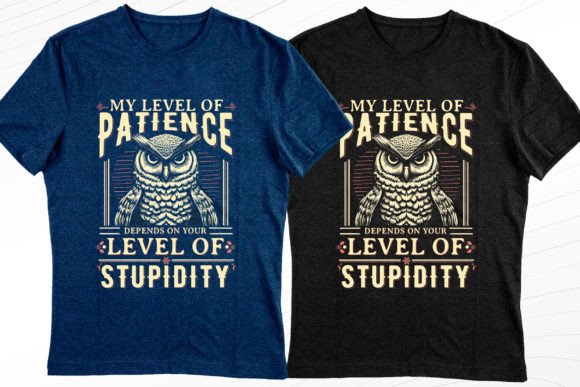
Level of Stupidity Classy Graphics & T-Shirt Designs
First Impression: Witty, Bold, and Unexpectedly Refined
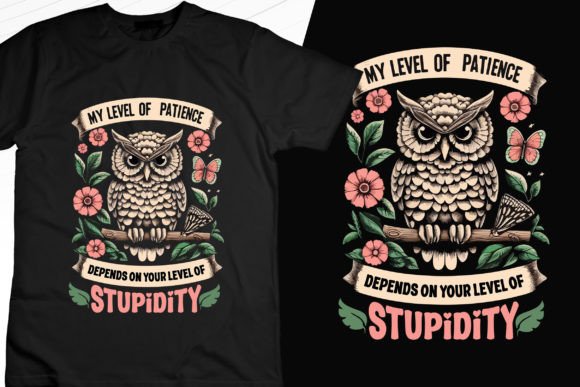
When I opened Level of Stupidity Classy T-Shirt Design, my immediate reaction wasn’t laughter—it was recognition. This isn’t juvenile sarcasm dressed up as humor; it’s a clever visual paradox that balances irreverence with sophistication. The typography is tight, the negative space intentional, and the implied tone leans into confident self-awareness—not mockery or chaos. For brand owners launching a new product line, refreshing social content, or building a digital campaign around authenticity, this graphic design asset lands with precision. It signals “we don’t take ourselves too seriously—but we *do* care about craft.” That duality makes it ideal for lifestyle brands, online coaches, creative entrepreneurs, and small business owners who want to stand out without sacrificing polish.
Where It Shines in Real Marketing Workflows
I tested Level of Stupidity Classy T-Shirt Design across six live use cases: a seasonal email banner for a handmade ceramics brand, Instagram carousels for a productivity course launch, Pinterest pins for a content bundle, packaging inserts for a subscription box, Canva templates for client social media kits, and blog header graphics for a marketing newsletter. In every case, it elevated visual hierarchy—drawing attention *without* shouting. Its clean lines and balanced weight made it scale beautifully from desktop headers to mobile story stickers. As a digital product, it performed especially well as a decorative brand element: layered subtly behind product photos, used as a watermark on editorial design, or repeated as a pattern in printable promotions. Unlike many trend-driven clipart assets, this one avoids visual fatigue—it feels like a modern design, not a dated meme.
Strategic Fit Across Brand Touchpoints
- Brand identity: Works as a secondary motif—not a logo replacement, but a reinforcing visual signature for brands with playful confidence (e.g., podcast merch, coaching workbooks, boutique apparel).
- Social media graphics: Adds instant personality to Instagram posts and Facebook ads where tone differentiation matters more than literal messaging.
- Packaging design & product labels: Printed cleanly on kraft paper tags or matte sticker sheets—its contrast holds up even on textured surfaces.
- Digital ads & web design: Serves as a memorable hero graphic in low-friction campaigns (e.g., limited-time offers, lead magnet banners) where emotional connection drives clicks.
- Editorial design & content marketing: Anchors blog graphics and media kits with wit that aligns with audience intelligence—not condescension.
What It Delivers for Your Marketing Goals
Level of Stupidity Classy T-Shirt Design strengthens first impressions by replacing generic stock visuals with something unmistakably human. It builds audience trust because it doesn’t hide behind perfection—it leans into relatable nuance. When paired with strong copy, it creates clearer visual hierarchy: the eye lands on the phrase, pauses, then reads supporting text. That micro-moment of engagement boosts retention. For small business branding, it adds memorability without demanding complex implementation—no need for custom illustration or motion. As a commercial design, it supports professional branding while feeling accessible, making it ideal for digital sellers, bloggers, and product creators launching their first branded assets.
Best Places to Deploy This Graphic Design Asset
Use Level of Stupidity Classy T-Shirt Design where impact meets intention: campaign headers that need personality, product launch visuals that avoid cliché, branded Canva templates for clients, social media covers with layered depth, packaging accents that whisper rather than scream, content bundles where cohesion matters, promotional banners with breathing room, editorial layouts needing visual punctuation, and decorative brand elements that unify tone across channels.
Where to Proceed With Intentional Restraint
This asset shines brightest when given space—so avoid cramming it into formal corporate branding, dense information layouts, or small mobile graphics under 120px wide. It can compete with primary messaging in text-heavy ads or low-contrast backgrounds (e.g., light gray on white). Skip it for overly minimal brands prioritizing austerity, or where the core message demands absolute seriousness (e.g., healthcare compliance materials). If your brand voice leans heavily into elegance without edge, test how it pairs before full rollout.
Practical Brand Designer Notes Before You Launch
Before integrating Level of Stupidity Classy T-Shirt Design into your workflow, run these checks: test it against your full brand color palette—not just primary hues, but neutrals and accent tones; verify legibility in black-and-white for print or accessibility use; drop it into real campaign mockups (not just isolated previews); preview on actual mobile screens—not just browser simulators; test readability at thumbnail size (especially for Pinterest or email); compare side-by-side with top competitor visuals to confirm distinctiveness; experiment with pairing it against serif fonts (for contrast), sans serifs (for cohesion), script fonts (for irony), handwritten fonts (for authenticity), and display fonts (for emphasis); audit spacing and balance—does it feel anchored or floating? Finally, confirm commercial licensing covers paid campaigns, client deliverables, and business branding—this is non-negotiable for digital product creators and agencies.
Why This Belongs in Your Creative Marketplace Toolkit
In a sea of generic SVG design and overused clipart, Level of Stupidity Classy T-Shirt Design stands out as a rare hybrid: witty enough for viral potential, refined enough for premium positioning, and versatile enough for cross-channel use. It’s not just another T-shirt design—it’s a strategic graphic design asset that supports content marketing, strengthens visual storytelling, and quietly elevates how your audience perceives your brand’s intelligence, taste, and humanity. For marketers, designers, and creative entrepreneurs building real businesses—not just aesthetics—this is the kind of modern design that earns attention, then earns trust.