Short Lives Matter Shirt Design: An Embroidery Review
First Look: What This Design Communicates
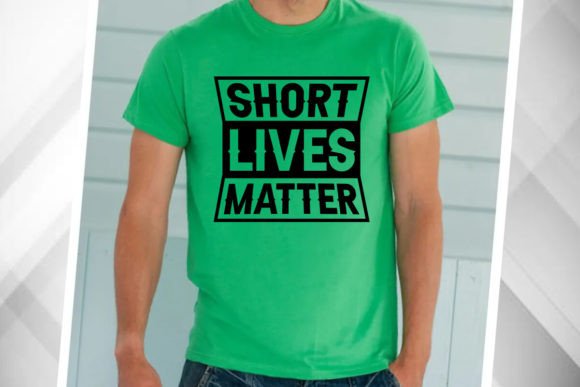
When I opened the Short Lives Matter Shirt design file, I immediately felt the playful boldness of the message. The phrase has a gentle twist that stops you, without shouting. As an embroidery designer who spends more time testing stitch-outs than scrolling mockups, I see the potential for a piece that becomes a conversation starter on anything from a tote bag to a baby bib. The layout probably leans on clean lettering, maybe with a small accent element. In the world of machine embroidery, that simplicity is a gift—it means fewer tiny details that can blur under thread. The mood is warm and slightly cheeky, making the Short Lives Matter Shirt design well suited for customers who appreciate handmade products with a wink and a nod. I’m already picturing it on a cozy sweatshirt at a craft fair, where someone smiles and says, “That’s clever. Who made that?”
A Real Project Test: Embroidering It onto a Canvas Tote
Let me ground this in a real job. I’m planning a small run of custom canvas tote bags for a boutique that sells goods with a cause. The owner wants a design that sparks connection but still feels polished. I pulled up the Short Lives Matter Shirt graphic to mock up placement on a 15 by 16-inch natural tote. The tote’s flat, sturdy weave is a forgiving canvas for embroidery—no stretch, no napped surface to swallow stitches. Here’s where the graphic nature of the file matters. Knowing this comes from the T-Shirt Designs category, I’m working with a print-ready image, not a pre-digitized embroidery file. That’s fine for my workflow; I’ll send it to a digitizer. But I have to think ahead: will the lettering maintain its personality at 4 inches wide? Will a satin stitch cover the thicks and thins without puckering? I’d test on a scrap of the same tote cotton first, using a medium-weight cutaway stabilizer. In this scenario, the design’s charm directly influences how a customer perceives product value. A crisp, clean rendition of the Short Lives Matter Shirt design on a premium tote could easily become a go-to gift item in the shop.
How Well Does It Translate to Stitches?
The heartbeat of any embroidery review is how a design behaves under the needle. The Short Lives Matter Shirt graphic is text-heavy by nature, and that brings both ease and risk. Text designs work beautifully when letterforms are uniform and at least 5mm tall, because you can use a neat satin stitch that feels substantial. If the source art has ultra-fine serifs or whimsical thinning, running stitch might look too faint, and a too-wide satin could blob. I’d examine the original file at actual size. Because it’s a Graphics type, I have the freedom to tweak outlines slightly before digitizing—I often nudge thin strokes a bit thicker so they don’t vanish after the third wash. The design’s overall shape might be horizontal, which makes it perfect for left-chest placements on shirts or centered on a tote. Just be careful not to reduce it too much; a minimum of 3.5 inches in width helps the message stay readable. For an embroidered patch, the same Short Lives Matter Shirt design could do well with a light fill stitch behind the letters, giving that familiar stitched-badge look I see trending on denim jackets and caps.
Thread Color and Fabric Choices
Contrast rules. With a message-driven piece, you want instant legibility. On light oatmeal cotton, a deep navy or charcoal thread makes the Short Lives Matter Shirt design pop. On a dark heather sweatshirt, warm white or cream thread softens the look and stays readable. I always run a black-and-white paper mockup first—if it works in greyscale, the embroidery will likely hold its own. For baby items, like a tiny bodysuit, pastel thread on white can be charming but may need a slightly heavier density to stand out after repeated washings. Polyester embroidery thread gives me the colorfastness I need for apparel that will see the laundry; I reserve rayon for decorative pieces that won’t face much friction. Before committing to 20 units of anything, I stitch the Short Lives Matter Shirt design on the exact garment, wash it twice, and check for thread breaks or shrinkage. Little things like that separate a trusted handmade shop from a forgettable one.
Where This Design Shines in a Small Business
Looking at the design’s character, I can slot the Short Lives Matter Shirt graphic into several profitable niches. It would be a standout embroidered patch that sewists can add to backpacks or jackets—sell the finished patches or offer them as DIY kits. Etsy sellers who specialize in personalized gifts could turn it into a framed hoop art piece for nursery décor or a sweet little something for a holiday gift swap. The message is short and centered, so a 4x4 inch hoop works fine on most home machines, making it friendly for beginners. A denim apron, a kitchen towel set, a lumbar pillow cover—each becomes a tiny branding moment. Because the file is sold as a graphic design within the T-Shirt Designs category, you’re truly buying the right to use the image for your creations, but you must double-check the license if you plan to digitize and sell finished products. I’ve learned to contact sellers directly when the wording is vague, just to keep my shop in the clear.
Caution Points You Shouldn’t Overlook
No design is universal, and I’d be doing a disservice if I didn’t mention the tricky spots. The Short Lives Matter Shirt design likely contains lettering that could condense poorly on a curved cap brim—test placement on a cheap blank cap before you accept an order. If any decorative dots or stars accompany the text, they might disappear on textured fabrics like terry cloth; a water-soluble topper saves the day. Stretchy knits, like your classic t-shirt blanks, demand a fusible cutaway stabilizer so the design doesn’t distort after a few wears. I never skip a stitch-out sample on the real garment. Also, keep an eye on stitch density: a design this focused on text can become stiff and scratchy if the digitizer packs a heavy fill behind it. Ask for a version with light underlay and a well-balanced satin stitch instead. Finally, be mindful of the cultural context of the phrase. Many customers love it, but know your audience. On baby items or children’s products, I’d consider whether the wording fits the brand voice and the buyer’s comfort zone.
Practical Stitch-Out Notes for Craft Business Owners
- Test on matching fabric weight first: A scrap of canvas, a sweatshirt sleeve, or a bodysuit offcut gives real-world feedback before you stitch on a final product.
- Tweak for the hoop: If using a small 4x4 hoop, ensure the Short Lives Matter Shirt design is digitized with slightly bolder strokes to retain clarity.
- Stabilize wisely: For tote bags and towels, one layer of medium tear-away plus a wash-away topping keeps lettering crisp. For tees, a firm cutaway is non-negotiable.
- Audit the thread palette: The design looks professional when you use a consistent thread brand and color code across all your products—this small consistency builds brand trust.
- Check the license: Because you’re buying a Graphics file, confirm with the seller that digitizing and selling on finished merchandise is allowed. Many T-Shirt Designs are intended for printing only, so a quick message can save headaches later.
- Run a gray-scale preview: Convert a mockup of the Short Lives Matter Shirt design to black and white on your screen; if shapes still read well, they’ll stitch cleanly.
Does This Design Boost Customer Trust and Sales?
In my experience, a message-driven piece can be a quiet workhorse. When someone unpacks a well-embroidered sweatshirt with the Short Lives Matter Shirt design and feels the smooth satin stitches under their fingers, they assume care went into every step. That assumption turns into repeat sales, positive Etsy reviews, and word-of-mouth at craft fairs. The design’s friendly, slightly humorous tone makes it giftable for housewarmings, new parents, or even a cheeky Valentine’s. Handmade presentation—crisp folds, a hand-written thank-you note—elevates the entire experience. But the thinnest thread in the design is execution. If a customer sees fuzzy lettering or a puckered patch, that emotional connection breaks. So the value isn’t in the file itself; it’s in how intently you test, digitize, and finish the Short Lives Matter Shirt project.
My Final Take as a Designer and Reviewer
After running through the mental stitch-outs, fabric tests, and seller angles, I’d keep the Short Lives Matter Shirt design in my asset library. As a Graphics type file from the T-Shirt Designs category, it gives me ownership over the digitizing process—I can adapt it for a dense patch or a light baby blanket without battling a pre-made embroidery file. That creative control matters when you’re building a cohesive line. For a beginner, the extra digitizing step might feel like a hurdle, but there are affordable services that turn any clean graphic into a stitch-ready format in a day. For experienced crafters, it’s a shortcut to adding personality without clutter. Treat the design with the respect a message piece deserves: test, stabilize, and choose a thread that honors the lettering. Do that, and you’ll have a product that feels intentional, professional, and just the right amount of fun.