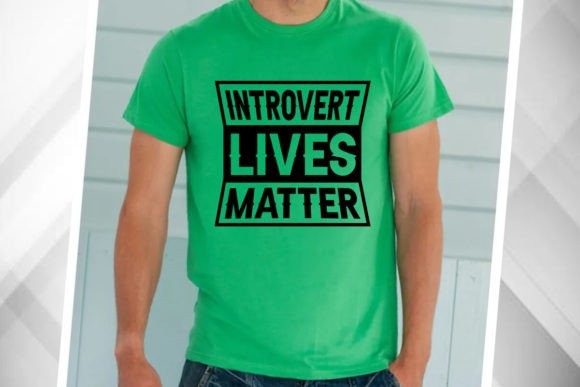
Introvert Lives Matter Tshirt Embroidery Review
As an embroidery designer who stitches test pieces almost daily, I’ve learned to spot which graphics will truly sing once threaded and hooped. The Introvert Lives Matter Tshirt design stopped me mid-scroll. It’s not just a catchy phrase—it carries a quiet, relatable energy that could translate beautifully into handmade products if handled correctly. But before I commit any digital file to a client order or my own small shop inventory, I put it through a rigorous mental checklist. I ask: Will it read clearly after stitching? How does it react to different fabrics? Does it add genuine value to a finished piece? Here’s exactly how that evaluation played out with this design, purely from a practical embroidery standpoint.
The Personality Behind the Design
Right away, the Introvert Lives Matter Tshirt design gives off a calm but confident mood. It’s not shouting—it’s stating. The typography likely leans on clean, legible letterforms, whatever the actual font is, because the message needs to be read instantly without strain. From an embroidery perspective, that’s already a positive sign. Overly decorative or condensed text often turns into a thread-blurred mess under the needle, but a straightforward layout tends to stitch out cleaner. I envision this design centered on a tee, yes, but also scaled onto a tote bag, a zip-up hoodie, or even the front panel of a canvas apron. The emotional hook is strong for introvert merch, mental health gear, or bookish lifestyle products—markets where subtlety sells.
Translating a Graphic into Stitch Reality
It’s critical to note what the product description tells us. It’s a print ready file created by a professional graphic designer with lots of experience. That means this is a T-Shirt Designs and Graphics asset, not a pre-digitized machine embroidery design. As someone who regularly converts artwork into stitch files, I appreciate the honesty: the creative work is done, but you’ll need to handle the digitizing step yourself (or outsource it) to get thread onto fabric. If the file includes a high-resolution vector, say an SVG or clean AI file, you’re in luck—tracing for embroidery software becomes straightforward. If it’s a raster image, expect a bit more manual work. Always verify the file format before purchasing, especially if your embroidery digitizing workflow depends on crisp outlines.
Where I’d Use It in a Real Embroidery Project
Let me walk you through a real scenario. Last week, a client asked me to create a small run of customized sweatshirts for a bookstore’s “quiet hour” event. The brief was simple: a design that felt inclusive, not flashy. The Introvert Lives Matter Tshirt motif immediately surfaced in my mind. I imagined it stitched on the left chest of a heather oatmeal sweatshirt, executed in a matte charcoal thread with a very fine satin-stitch outline around each letter to give it gentle pop without shouting. On a flat, medium-weight knit like that, the design would likely hold its shape well, provided I use a cutaway stabilizer to prevent distortion. Another perfect use? A natural cotton tote bag—the flat woven surface is forgiving, and the design could be enlarged slightly to fill the bag’s side panel, turning a simple carryall into a conversation starter at a craft fair.
Embroidery-Friendly Breakdown: What to Watch For
When I evaluate any typography-heavy graphic for embroidery, I zoom in mentally on the details. Here’s my checklist for the Introvert Lives Matter Tshirt design:
- Letter weight and spacing: Are the counters (the holes inside letters like ‘a’, ‘e’, ‘o’) wide enough to not close up when stitched? In a fill stitch or satin stitch, condensed letterforms can become solid blobs. I’d run a small test first.
- Stitch density: High density on light fabric can cause puckering. I’d lower the density slightly and add a underlay stitch to stabilize the base.
- Hoop size compatibility: The product doesn’t specify dimensions, so you must measure the design yourself. For a left-chest logo, a 4x4 inch hoop might suffice; for larger placements, you’ll need to confirm it fits a 5x7 or even an 8x8 hoop.
- Curved or textured surfaces: Caps are tricky with text-heavy designs. I’d avoid stitching this onto a baseball cap unless the file includes a specialized curved-text version. Flat surfaces (bags, pillow covers, kitchen towels, tees) are much safer bets.
- Thread colors and contrast: Test on both light and dark fabric. A design that looks striking in black on white might disappear on charcoal. I often create an inverted version for dark garments, swapping the thread colors in my digitizing software.
Stabilizer and Fabric Choices Make or Break It
Even the most beautiful design can fail on the wrong foundation. For sweatshirt embroidery, I’d pair a cutaway stabilizer with a temporary spray adhesive to hold the fabric perfectly flat. On a thin, stretchy T-shirt, a no-show mesh stabilizer would be my go-to, because you don’t want the stitches feeling stiff against the skin. If the design ends up on a tea towel or a linen pillow cover, a medium-weight tearaway works well, and you can even float the fabric if the hoop size gets tight. One overlooked detail: textured fabrics like waffle weave or terrycloth can swallow lettering—make sure the design is scaled large enough to remain readable, and consider stitching a plain foundation underlay first.
Testing Protocol: Don’t Skip This Step
I can’t stress enough how vital a test stitch is before any production run or customer order. For the Introvert Lives Matter Tshirt design, I’d do the following:
- Stitch a sample on mid-weight cotton with a satin stitch around the text and a light fill stitch behind if any solid panel exists.
- Wash and dry the sample normally to check for thread breakage, fraying, or shrinkage distortion. Introvert-friendly products still need to survive laundry day.
- Test in black and white. Photograph the stitched sample, convert the photo to grayscale, and see if the message still pops. If text blends into the background too much, adjust thread contrast.
- Stitch on a fabric scrap of the exact garment you plan to sell—not just a practice cloth. Denim feels different under the needle than jersey; you’ll catch skipped stitches or registration shifts early.
Commercial Use and Licensing: A Necessary Pause
Many crafters and Etsy sellers get burned by copyright gray zones. The product description for this Introvert Lives Matter Tshirt asset doesn’t spell out whether you can stitch it onto finished products and sell them. As a graphic from the T-Shirt Designs category, it’s likely intended for commercial use on apparel, but you must read the license terms before you list a single embroidered hoodie. Can you use it on physical goods? Is there a limit on the number of products? Does the license transfer to your customers as a finished product? These questions matter deeply for craft business owners and boutique shops. Never assume; always confirm directly with the designer or platform policy.
Where the Design Truly Shines for Small Shops
Despite the technical cautions, I see solid potential. The Introvert Lives Matter Tshirt graphic fits snugly into the niche of personalized gifts and subtle statement wear. I can picture it embroidered on a sage green apron for a tea-loving friend, or on a soft baby shower onesie (with a pastel thread palette, smaller scale) that reads “Future Introvert.” On a patch, it could transform a plain backpack into something personal. For craft fair tables, this design brings storytelling to your inventory—buyers connect with the sentiment instantly. It’s also a smart addition to a printable mockup bundle if you sell digital previews to other makers.
My Real-World Recommendation
If you’re a maker who already digitizes your own designs or works closely with a digitizer, the Introvert Lives Matter Tshirt graphic is a worthwhile purchase. It offers a ready-made, trending concept without you having to start from scratch. The key is to manage your stitching variables: thread colors, stabilizer, fabric type, and scaling. Don’t expect a plug-and-play embroidery file unless the seller explicitly provides one—this is a graphic, and you are the craftsperson. Once properly digitized, the design can absolutely elevate a custom apparel piece, a handmade product, or a boutique branding drop. Treat it as a creative starting point, not a finished stitch-out, and you’ll be thrilled with the results. For its vibe alone—quietly bold and distinctly human—it earns a confident nod from my embroidery corner.